Resistiendo a tormenta

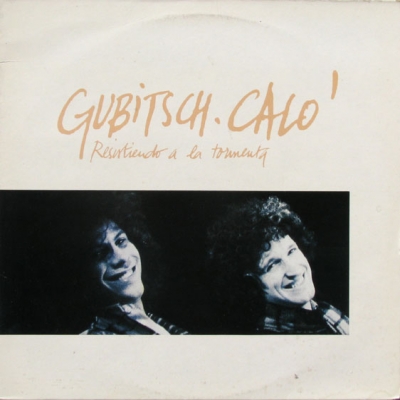
“Resistiendo a la tormenta” is the first album that is completely composed by Tomas Gubitsch. Recorded in 1980 with his faithful accomplice, Osvaldo Calo on the piano, it includes a piece that is more orchestrated “Ciudad herida” where the duo Gubitsch Calo invite, amonst others, the bandoneon of Juan José Mosalini.

This first work of the “tango according to Gubitsch”, a collection of pieces written between the age of twenty and twenty three years, allows a glimpse of themes that will be developed more in albums to come, and little by little will create his incomparable style.

For a long time unobtainable, we are happy to offer you the remastered digital version of this album.


LISTEN AND BUY THIS ALBUM :

Resistiendo a la tormenta

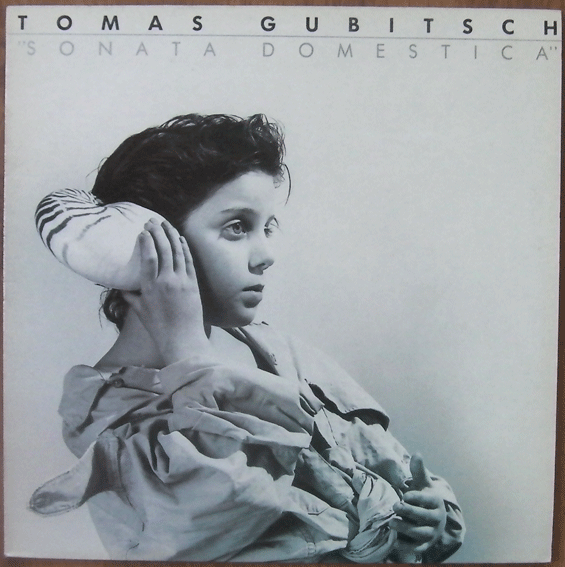
Sonata Doméstica

Sonata domestica” was recorded in 1986. The composotion in four movements that gives the title to the album – and which took up the B side of the original vinyl – is a compositional work where savant techniques meet post Piazzolian tango. As always accompanied by the virtuoso pianist Osvaldo Calo, “Sonata domestica” sees the birth of the first recorded collaboration with the double bass player Jean Paul Celea and predicts the mythical trio which they will form for nearly ten years.

LISTEN AND BUY THIS ALBUM :

Sonatá Doméstica

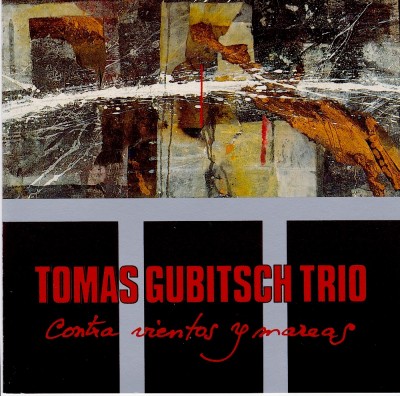
Contra vientos y mareas

“Contra vientos y mareas” finishes the first cycle of three albums. A work around the form of tango, its renewal and the specific openess that its musicians expect of it. It was entirely recorded by the trio (in 1989) with Osvaldo Calo (piano) and Jean Paul Celea (double bass) and it is probably the finishing of the first step of Gubitsch as a composer of a chamber music tango that can mix with urban musics such as rock or a certain type of jazz. Many of the pieces are still played “live” by Gubitsch today, which just goes to show how well the album has matured.

LISTEN AND BUY THIS ALBUM :


Contra Vientos y mareas

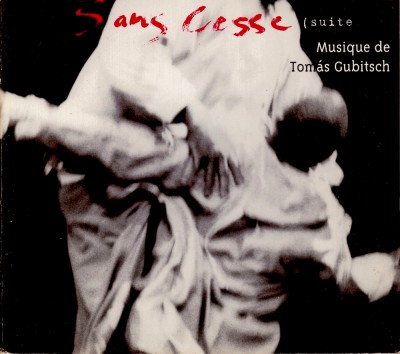
Sans Cesse, suite…

“Sans cesse, (suite… ” is a work apart in Tomas Gubitsch’s discography. It is the musical evidence of an extraordinary experience that took place in the Theatre of Espal (Le Mans) during the years 1995 and 1996 with a group of fifty people whose common point was to be unemployed, as well as being on stage, with the Orchestra of Basse Normandie, an abundant brass fanfare, and who were joined by a group of incredible soloists from rock, tango and jazz.

A CD that is beyond categories, where contemporary music gets involved with things that concern it and things that are none of its business. Or the story of a no man’s land that was transformed, from living together, into an all (wo) men’s land.

LISTEN AND BUY THIS ALBUM :

Sans Cesse

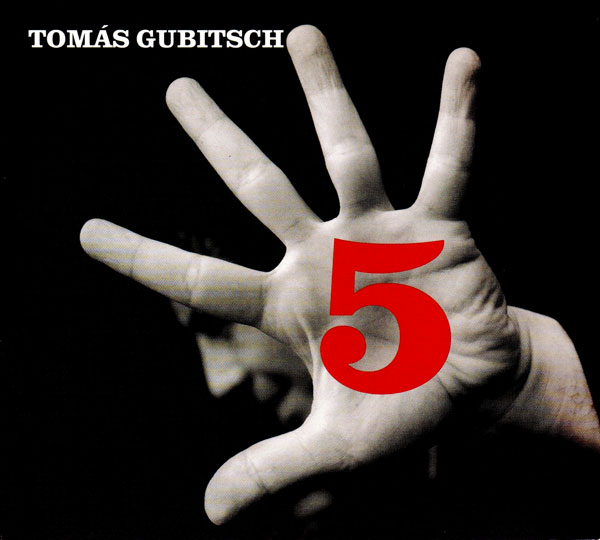
5

« 5 » marks the return of Gubitsch to the guitar after a period of eight years where he devoted himself solely to composing and conducting for orchestras. And by going back to the guitar, he went back to the iconoclastic tangos which he is known for. Accompanied by his colleague as always, Osvaldo Calo, as well as three young soloists, Juanjo Mosalini on the bandoneon, Sebastien Couranjou on the violin and Eric Chalan on the double bass, he has reformed the typical quintet of Piazzoola (and even though it is not as widely known, the quintet of Horacio Salgan) to better stand out from the competition : tango has never been a goal in itself for Gubitsch, what interests him is the work that can be made from tango.


AVAILABLE SOON

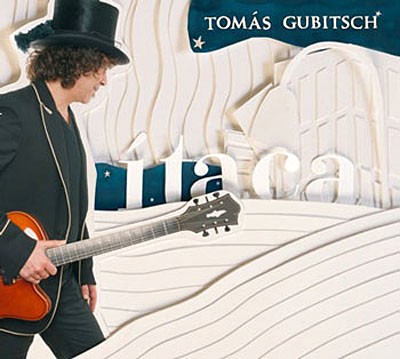
Ítaca

If I had to define the style of the pieces that make up « Itaca » (Ithaca), I would say that it is « my-tango ». An intimate tango, the music of my imaginary town. A town where we come from and a town where, ultimately, we return, a town that we carry, that we invent and that we forge in ourselves. The music of “Itaca” is that of a place whose name is unimportant, but, like the poem by Kavafis, the importance is the journey that we take, once we have left the place, and find it, over and over again, often where we least expect it.

This album could not have existed without the complicity of four great musicians and friends. The compositions are mainly the result of our many concerts and journeys across many continents, of nearly just as many celebrations, of our rich differences and our improbable common points.

These poets, these lions, with whom I had the chance to record « Itaca » are called :: Eric Chalan, Gerardo Jerez le Cam, Iacob Maciuca and Juanjo Mosalini.

I am forever indebted to them.

The quintet that we form would not be fully complete without its sixth member : Philippe Teissier du Cros, who had the ear and the technique to record and mix this album. Our deepest thanks to him.


LISTEN AND BUY THIS ALBUM :


Ítaca

Surel, Segal & Gubitsch

It is in 2014 that a new unclassifiable trio comes into existence “Surel Segal & Gubitsch”. An apparently improbable meeting. Three characters and three voices – as unique as the violin of Sebastien, the cello of Vincent and the electric guitar of Tomás- brought together as much by the musical territories that they share as by their differences and their unique features. Their repertory, essentially their own compositions, also gives space to versions of pieces by, amongst others, Thelonious Monk, Hermeto Pascoal or Charlie Chaplin. On stage, Sebastien, Vincent and Tomás sail between written scores and improvisations and navigate between many musical continents, plunging us into the subtley and the intensity of their shared language that is the language of sound. To put it briefly, they play together. Simply listening to them will convince you that their apparently improbable meeting was in fact unavoidable.

Tomás Gubitsch 6 • ULYSSES’ TANGO

1. Ulysses’ inventory

2. Todos los sueños, el sueño

3. (to be continued…)


It is probably in the sextet that Gubitsch’s writing takes on its fullest forms. The palette of sonic colours, along with the harmonic and contrapuntal richness of this group allows him to push his iconoclastic tango towards a chamber music that is as sophisticated as it is moving, as subtle as it is energetic, as intimate as it is violent.


Sharing the scene with his accomplices for ten years – Juanjo Mosalini and Eric Chalan -, they are joined by three exceptional soloists :  Sébastien Surel(violin), Marc Desmons (viola) and Lionel Allemand (cello),
The unique « voices » of these six virtuosos are joined by, amongst others, the voices of Marilú Marini, of Angélique Ionatos and of John Greaves.


The triptych « Ulysses’ Tango » was conceived in a version that existed in physical space as well as in a concert version. The voices of poets that Tomás knew- Borges, Cortazer or Fondebrider – are mixed with those of Dylan Thomas or Kavafis.


Kavafis’ poem, « Ithaca », is the guiding light of this compositional triptych of which the first two panels were created in the Theatre de la Ville, Paris, in 2012 and 2014 (the creation of the third part is scheduled for the beginning of 2016 as part of the artist’s residency in the Theatre des Bergeries, Noisy-le-Sec and in partnership with the Theatre de la Ville).

Tomás Gubitsch Trio

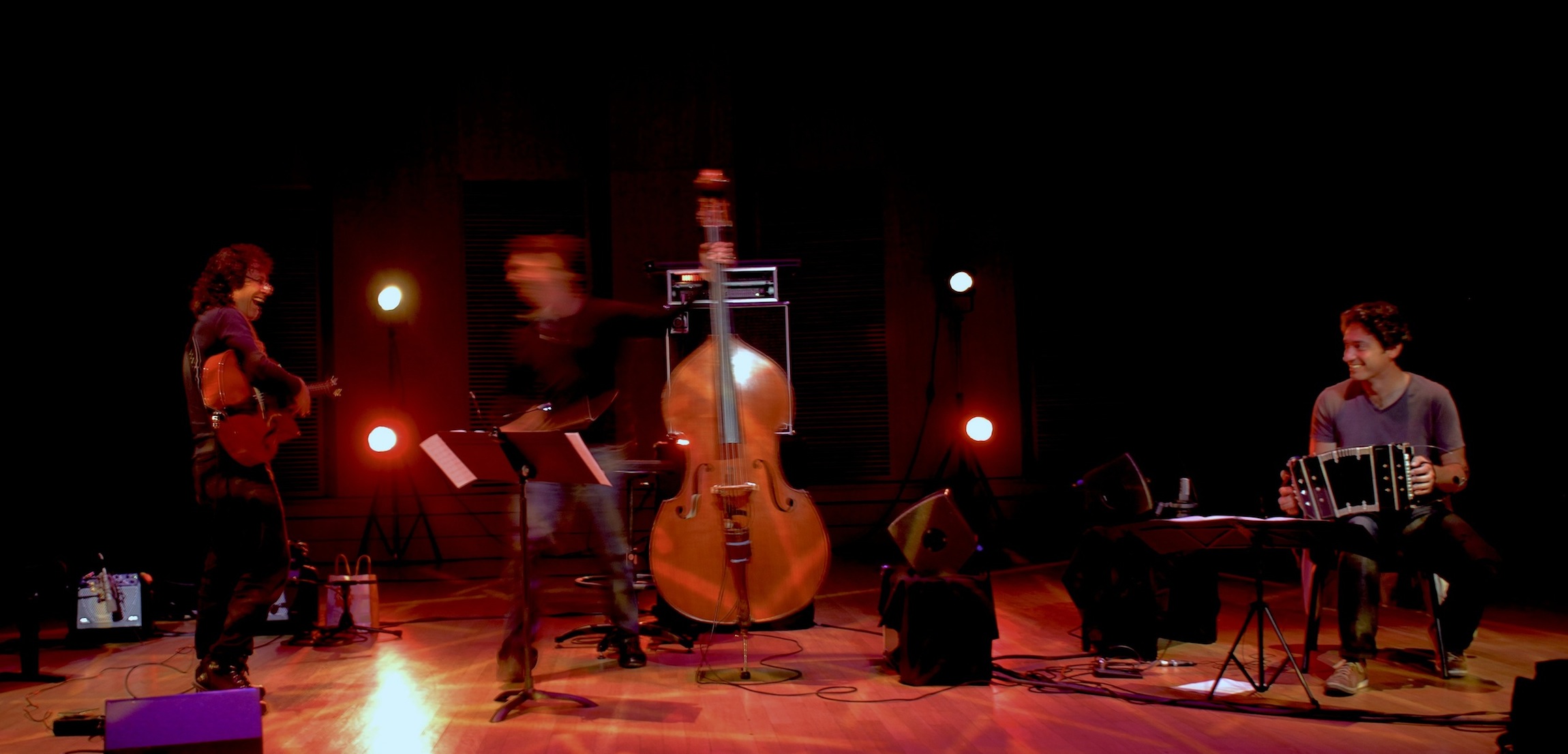
Tomás Gubitsch- « magic fingers » as he is known in the Argentinian press- presents us his compositions, including ones from his last album « Itaca » in trio. The two virtuoso who share the stage with him – Juanjo Mosalini, for whom the bandoneon is a family affair, and Eric Chalan, a polyglot on the double bass- these two virtuoso mix, transform and explode a Tango that is, without a shadow of a doubt, contemporary. Post-tango ? Tango ravel-zappa-hendrixien ? Tango jazz & roll ? All these definitions amuse Tomas.«Just my music » he prefers to say.


Juanjo Mosalini (bandoneon)

Éric Chalan (double bass)

Tomás Gubitsch (guitar and composition)